Making 250+ characters possible
Albedrío Vista needs too many characters to build them one by one.That is the simple problem behind a lot of the technical work. If the game had five main characters, I could model them
Login with Patreon to unlock marked mature media
Albedrío Vista needs too many characters to build them one by one.
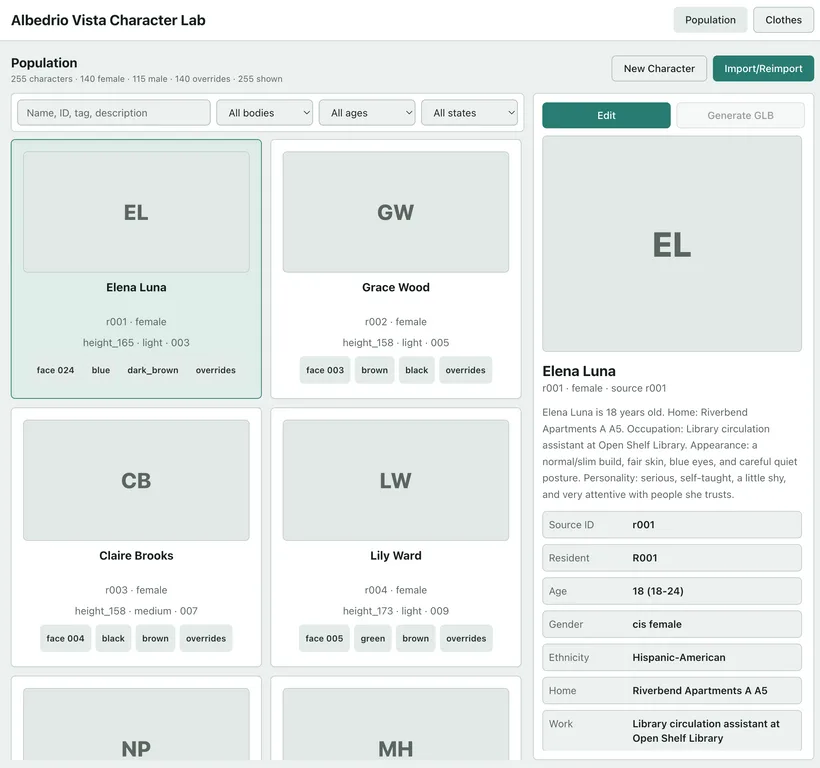
That is the simple problem behind a lot of the technical work. If the game had five main characters, I could model them slowly by hand and polish each one. But the neighborhood needs more than two hundred residents. Some will be important, some will be background people, but all of them need to feel like they belong in the same place.
My first idea was to export some VRM characters with small changes and combine the differences. One export taller, one with a different waist, one with a different chest size, and then mix the vertex deltas. It sounded clever for maybe one week.
It broke as soon as I combined enough changes. A body could look correct with only one edit, but the shape started to collapse when several edits were mixed. The lesson was clear: the exported mesh was not the real source. It was the final result of a more complex recipe.
So I had to go deeper than I expected.
The useful data was spread through Unity asset bundles, binary files, materials, meshes, skeletons, posesets, hair data and clothing parts. I used tools like AssetRipper and Cpp2IL to understand the shape of the application, then wrote small scripts to inspect the rest. A lot of this work was not pretty. It was reports, vertex counts, strange names, and many tests that only answered one small question.
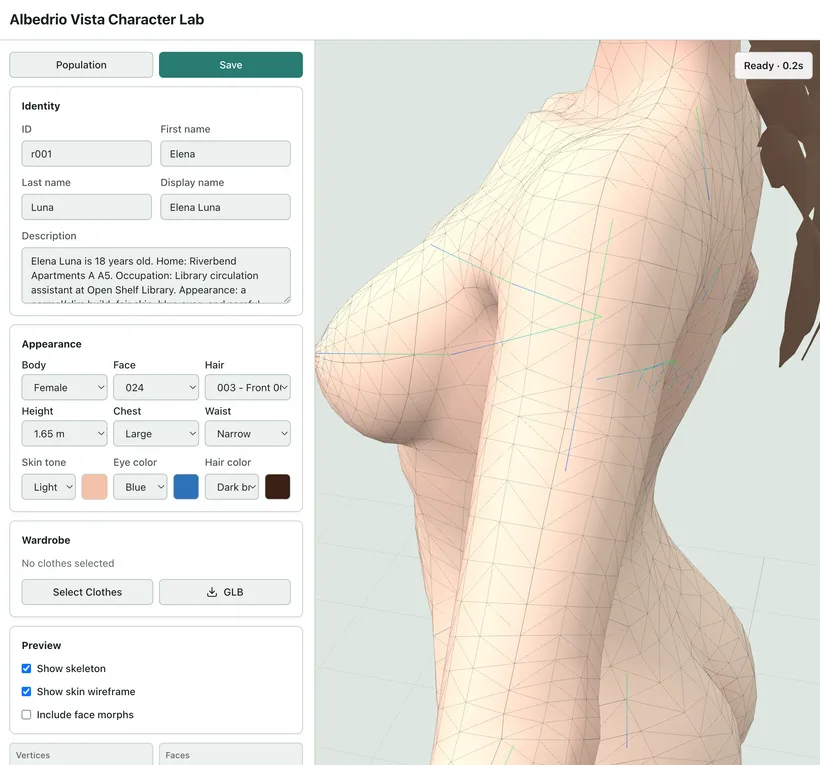
The first big win was reconstructing a neutral character from the internal mesh, skeleton and bind pose data. That changed the feeling of the project. It was not only "I can look at the files" anymore. It became "I can rebuild a character."
That also explained why the first approach failed. Height, waist, chest, head and face are not just vertex movements. Many of them affect bones before the mesh is skinned. If I mix only the final meshes, I am mixing too late.
After that, the work became more visual. I needed skin, eyes, face presets, makeup, hair and clothes. A gray body in Blender is useful for debugging, but it does not tell me if this can become a cast of people.
Faces took more time than I expected. At first the presets looked weak, almost like the same person with a slightly different jaw. Later I found the full FaceSet data: shape, eyes, brows, overlays, lines and textures. Once all of that was connected, the faces started to have personality. Not finished personality, but enough to see different people.
Hair was worse. I expected normal meshes, but many styles were procedural: curves, guides, widths, caps, profiles and strand groups. The first exports looked like paper strips glued to the head. I had to rebuild the hair geometry, fix the cap so it could take color properly, and adjust the preview so transparent hair did not render in a broken way.
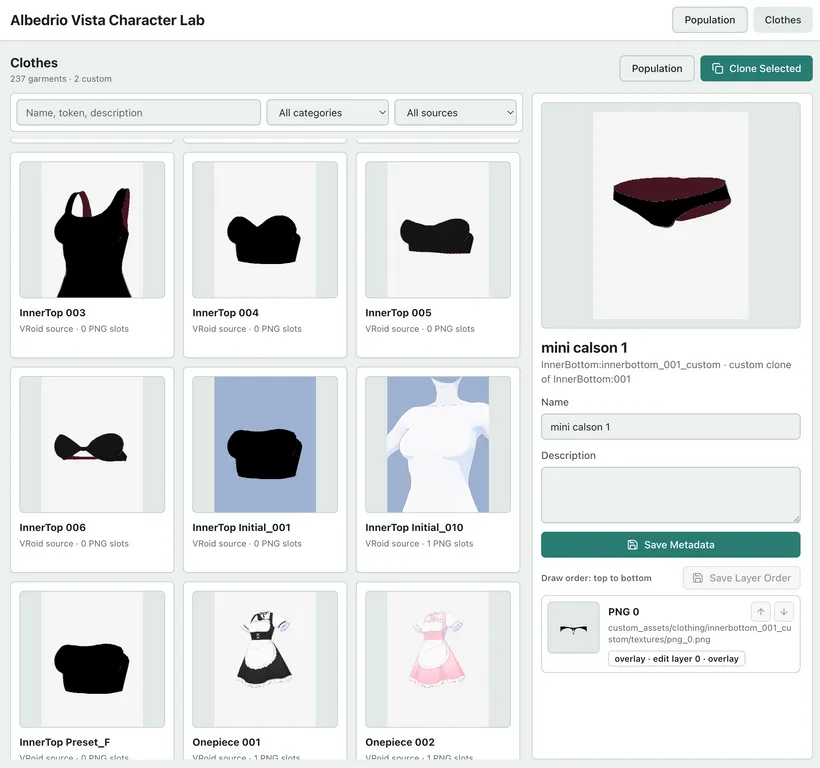
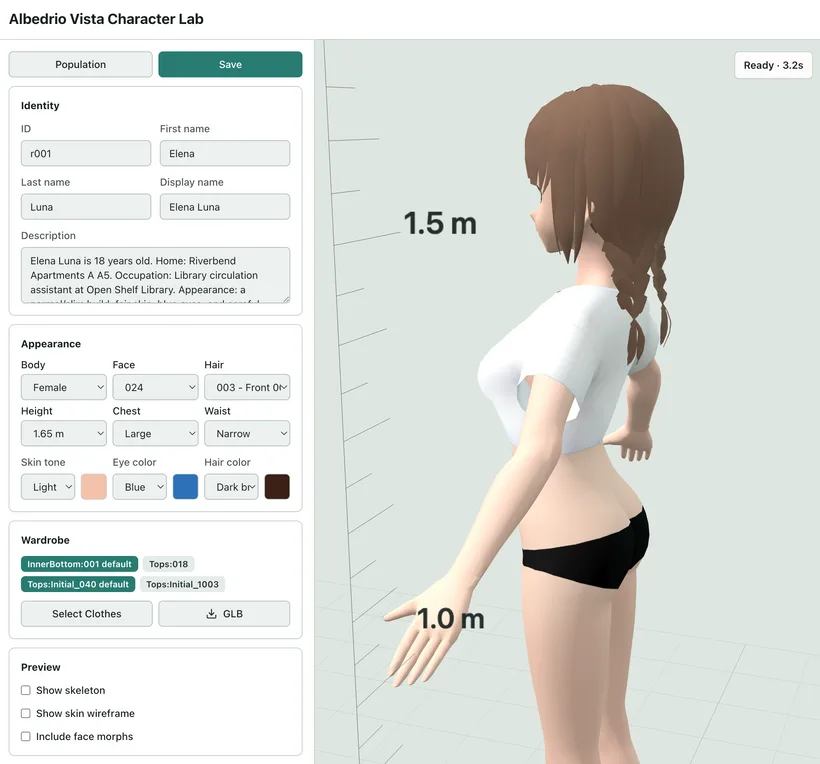
Clothing was the final part of this vertical slice. I built a small garment catalog and started selecting everyday pieces instead of full costume sets. I also decided to keep the full body under the clothes. The generator can use masks to hide clipping, but it should not destroy the body just because a character is wearing pants or shoes.
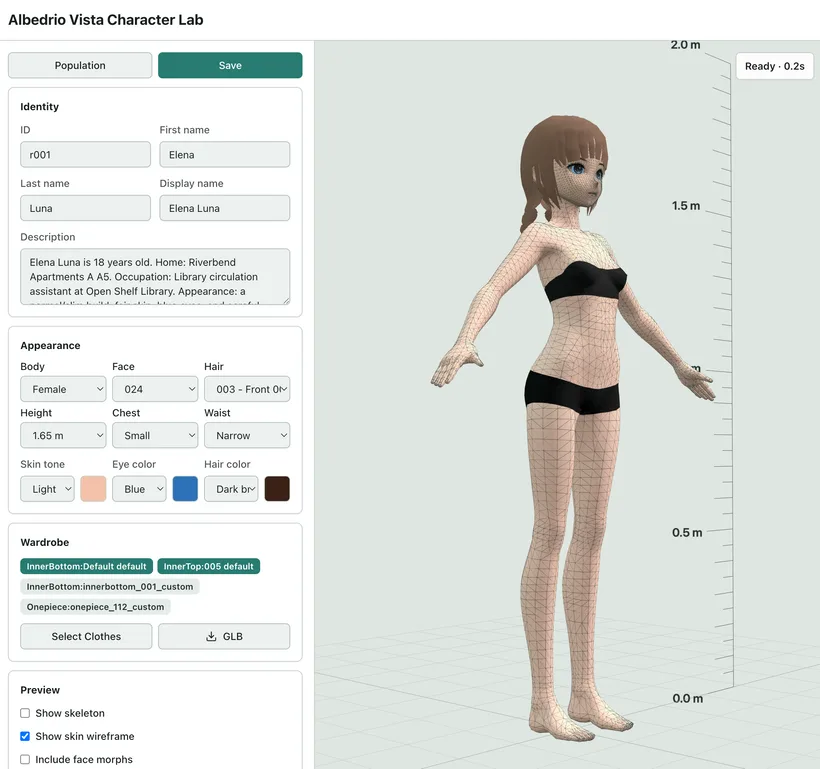
By the end of this stage I had a female character export with body presets, face presets, skin materials, eye color, makeup, reconstructed hair, clothing and a rigged GLB.
It is still not final production quality. But it proves the important thing: I can create characters from data, then spend manual time where it matters. For a town this big, that is the only way the project can scale.